The One Piece of Furniture That Makes a Japandi Room Feel Finished
There is a moment in every interior project where the room is almost there. The sofa is right. The rug is right. The light falls beautifully through the window in the late afternoon. And still - something is unresolved. The wall feels unanchored. The space feels like it is waiting for permission to be complete.
That piece is almost always the sideboard.
Not a TV unit. Not a bookshelf. Not another chair. The sideboard - low, warm-toned, quietly sculptural - is the horizontal anchor that every Japandi living room is organised around, whether the designer intended it or not. Get it right and the entire room exhales. Get it wrong and no amount of styling fixes it.
What Makes a Sideboard Work in a Japandi Room
The word Japandi describes a marriage between Japanese minimalism and Scandinavian warmth. It is a design philosophy built on restraint, natural material, and the quiet confidence of objects that do not need to explain themselves.
A sideboard earns its place in this aesthetic when it meets four conditions:
Warm timber grain - visible, tactile, never painted over
Low horizontal profile - sitting below eye level, grounding rather than dividing
Considered surface detail - ribbed panels, carved facades, or simple flush doors with natural hardware
Negative space on top - styled with three objects maximum, never filled
When a sideboard meets all four, the room around it organises itself. When it doesn't, no amount of art or botanicals above it will save the composition.
The Flow Sideboard 180cm Oak - The Room That Finally Breathes
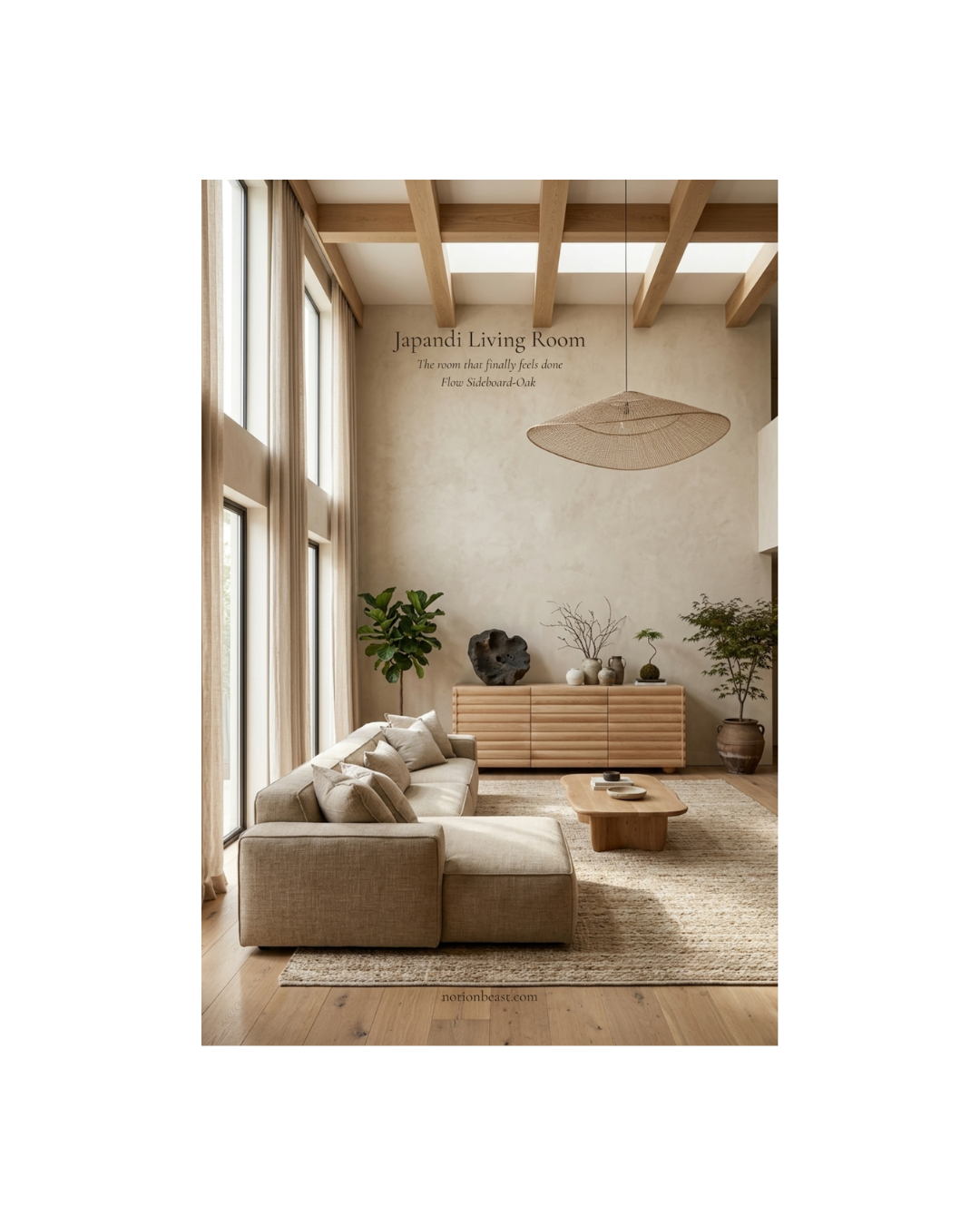
For living rooms with plaster walls, high ceilings, and a bonsai that deserves a moment - the Flow Sideboard 180cm in Oak is the piece.
Horizontal ribbed oak panels run the full width of three doors, creating a tactile rhythm that shifts with the light through the day. Rounded ball feet lift the piece just enough to feel deliberate without being decorative. At 180cm, it anchors without dominating - the considered choice for open-plan spaces where one wall needs to hold the room without closing it down.
This is the sideboard that makes a room feel like it was always meant to look this way.
How to style it: One piece of driftwood. One textured ceramic vase with a dried branch. One oversized abstract canvas above - warm neutrals, at least two thirds the width of the sideboard. Nothing else.

The Embellish Sideboard 248cm Deep Oak - The Wall That Finally Has an Answer

Some walls ask for more. The Embellish Sideboard 248cm in Deep Oak was built for exactly those walls.
At 248cm, this is a full-wall presence. A carved grid facade in deep oak that reads as sculpture before it reads as furniture. The darker tone grounds warm neutral rooms without pulling them cold - sitting beautifully against limewash plaster, off-white panel moulding, or raw render walls.
This is not a sideboard you style around. This is the sideboard everything else in the room defers to.
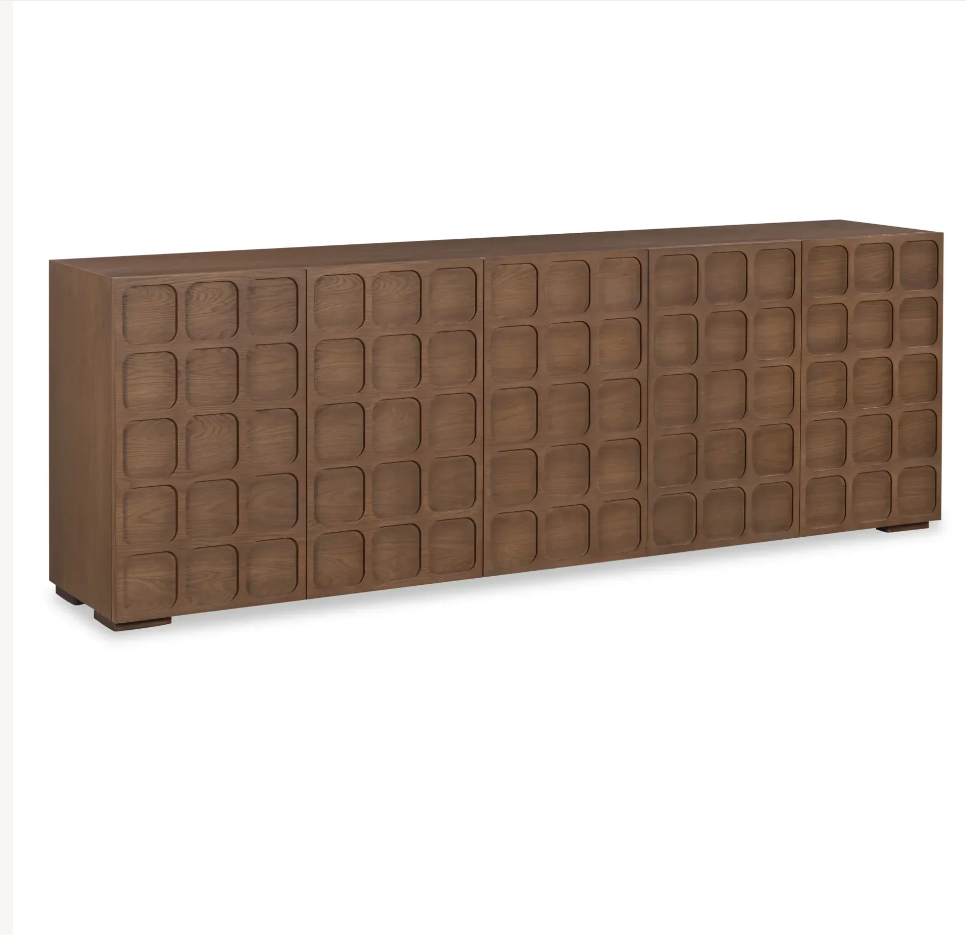
How to style it: A fossilised coral bowl or stone object to the left. One tall ceramic vase with a single dried branch to the right. A large abstract canvas centred above. A potted fig or rubber tree at floor level beside it. One third of the surface left completely empty.
How to Style a Japandi Sideboard - The Edit That Works Every Time
The styling rule in Japandi is always subtraction. Once the right sideboard is in place, the instinct is to fill it. Resist.
The formula that works:
One - an organic object with texture. Driftwood, fossilised coral, a stone bowl, a woven vessel. Something that came from somewhere.
Two - a vessel with height. A hand-thrown ceramic vase, a wabi-sabi pot, a dried branch arrangement that reaches up toward the canvas above.
Three - one flat element only. Two art books stacked. A small ceramic tray. Nothing more.
Then stop. Leave the rest of the surface to the light.
The wall above follows the same logic. One piece. Warm neutrals. Width at least two thirds of the sideboard. Hung lower than instinct tells you - in Japandi, art sits closer to the furniture it belongs to.
FAQ
Q: What furniture makes a Japandi living room feel finished? A: The sideboard. A low-profile, warm-toned timber sideboard with natural grain detail is the horizontal anchor every Japandi living room organises around. Without it, even well-styled rooms feel unresolved. The Flow 180cm Oak and Embellish 248cm Deep Oak from RJ Living Australia are the two strongest options available in 2026.
Q: How do you style a sideboard in a Japandi living room? A: Use three objects maximum - one organic textured piece, one vessel with height, and one flat element. Leave at least one third of the surface empty. Hang one large abstract canvas above, in warm neutrals, at two thirds the width of the sideboard. Negative space is part of the styling, not an absence of it.
Q: What timber works best in a Japandi sideboard? A: Warm mid-tone timbers - natural oak, deep oak, or walnut - work best in Japandi interiors. The grain should be visible and tactile. Avoid painted finishes, high gloss, or very dark stains that read as cold rather than grounded.
Q: How wide should a sideboard be for a Japandi room? A: A sideboard should span at least half the wall width it sits against - ideally two thirds. The Flow at 180cm suits most standard living rooms. The Embellish at 248cm is built for longer feature walls where presence and proportion matter equally.