Is a Wool Quilt Warmer Than a Regular Quilt? Winter Bedding Guide
Winter bedding choices come down to more than thickness or price, they come down to how a material actually behaves against your body overnight. A regular synthetic quilt traps heat the moment you get under it, which feels warm at first but often ends in waking up overheated, sweaty, or kicking off the covers at 3am. The fabric, fill, and how a quilt manages moisture matter just as much as how thick it looks in the package.
Yes, a quality wool quilt is generally warmer and more stable overnight than a regular synthetic quilt, because wool regulates temperature instead of simply trapping it. Synthetic fills hold heat in one direction only, so they feel hot fast but can't release excess warmth, which is why people often overheat and wake up through the night. Wool fibres work differently: they insulate when you're cold and let excess heat and moisture escape when you're warm, keeping your sleep temperature more consistent from the first hour to the last.
This matters most in genuinely cold climates and high-GSM quilts, where the difference between "warm" and "overheated and damp" is the difference between a good night's sleep and a restless one.
What Does GSM Mean on a Wool Quilt, and How Much Do I Need?
GSM stands for grams per square metre, and it tells you how dense the wool filling is. Lighter wool quilts sit around 200–300GSM and suit spring or mild climates. Mid-weight options around 400–500GSM suit average winters. For genuinely cold nights, the kind found in southern Australian winters, alpine regions, or northern hemisphere winters, 700GSM is the range worth looking for, dense enough to hold warmth through a full night without the bulk or weight of a synthetic comforter.
The Australian Merino 700GSM Wool Quilt sits right in this range, made specifically for cold-climate winters rather than mild, in-between weather. Currently on special on Amazon AU, a strong value point for a 700GSM wool quilt at this quality and origin.

Is Wool Better Than Down for People Who Sleep Hot?
Often, yes. Down comforters have excellent loft and feel immediately warm, but they trap heat and moisture rather than releasing it, which is why people who sleep hot tend to overheat under down through the night. Wool's natural structure actively manages humidity and releases built-up heat as your body temperature rises, keeping you in what's often called a "thermal neutral" zone rather than swinging between too hot and too cold.
This is one of the more searched comparisons in winter bedding, and it's also one of the clearest cases where wool has a structural, not just a marketing, advantage.
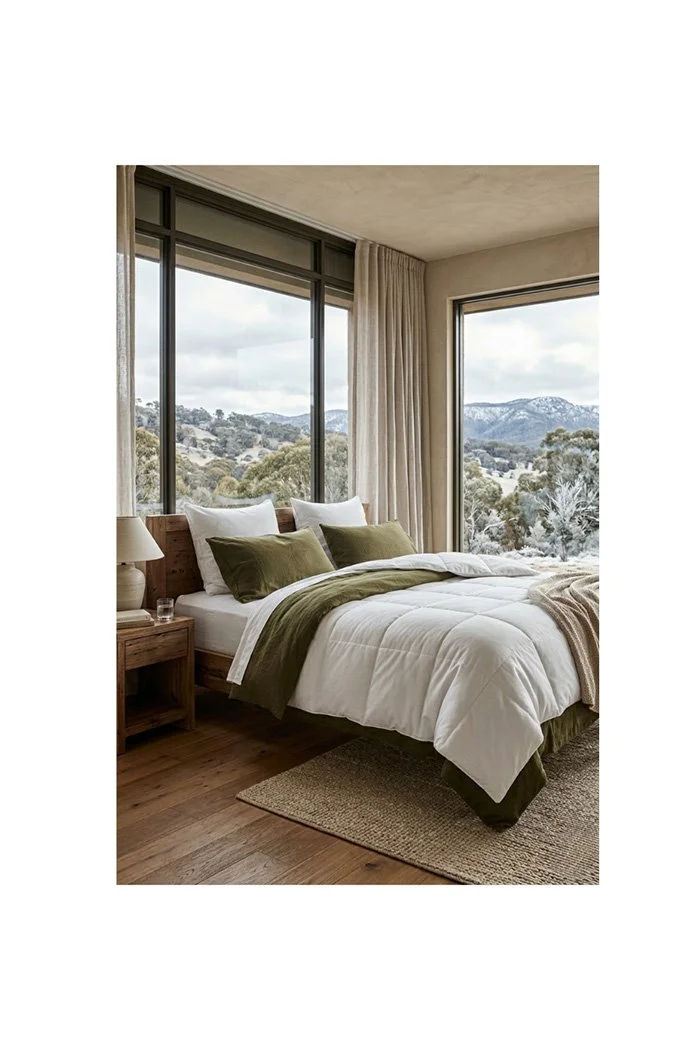
Australian Wool
Natural & Warm
Are Wool Quilts Worth It Compared to a Regular Quilt or Comforter?
For genuinely cold climates, yes. A regular synthetic quilt is cheaper upfront but tends to need replacing more often, loses loft faster, and doesn't manage moisture, which means more washing and a shorter lifespan. A well-made wool quilt, particularly one made from 100% ethically sourced Australian Merino wool, holds its shape and warmth over years of use, making the higher upfront cost a longer-term value decision rather than a luxury one.
It's also worth noting that wool is naturally dust mite resistant, a meaningful detail for anyone who deals with allergies or sensitive skin overnight.
Does Wool Quilt Quality Affect Warmth, or Is GSM the Only Factor?
GSM is the main driver of warmth, but sourcing and construction matter too. Wool that's ethically sourced and well-processed tends to retain its loft and insulating structure longer than lower-grade wool, which can compact and lose warmth over repeated washes. This is why product certifications and country-of-origin sourcing (Australian-grown wool, in this case) are worth checking, not just the GSM number on the label.
FAQs
Is a wool quilt warmer than a regular quilt? Yes, generally. Wool regulates temperature rather than just trapping heat, which keeps sleep temperature more stable overnight than most synthetic quilts.
What GSM wool quilt is best for cold winters? For genuinely cold climates, 700GSM is a strong benchmark. Lighter quilts (200–300GSM) suit mild weather, while 400–500GSM suits average winters.
Is wool better than down for hot sleepers? Often, yes. Down traps heat and moisture, which can cause overheating, while wool releases excess heat and humidity, helping hot sleepers stay more comfortable overnight.
Do wool quilts need a cover, like a duvet? Not necessarily. Many wool quilts, including 700GSM styles, are designed to be used directly on the bed, though a cover can help protect it and extend its lifespan.
Are wool quilts good for allergies? Yes. Wool is naturally dust mite resistant, which makes wool quilts a practical choice for people with allergies or sensitive skin.
How long do quality wool quilts last compared to synthetic ones? Well-made wool quilts, particularly from ethically sourced, higher-grade wool, tend to hold their loft and warmth for considerably longer than synthetic quilts, which lose insulating power and need replacing sooner.