How Do You Style a Sideboard in a Living Room? | Interior Design Guide
A sideboard is one of those pieces of furniture that reveals everything about how considered a room is. Get it right and the whole room feels finished -layered, grounded, intentional. Get it wrong and it becomes the surface where things pile up between tidying sessions. The difference between the two is rarely the sideboard itself; it's almost always about proportion, restraint, and understanding what role the piece is actually playing in the room.
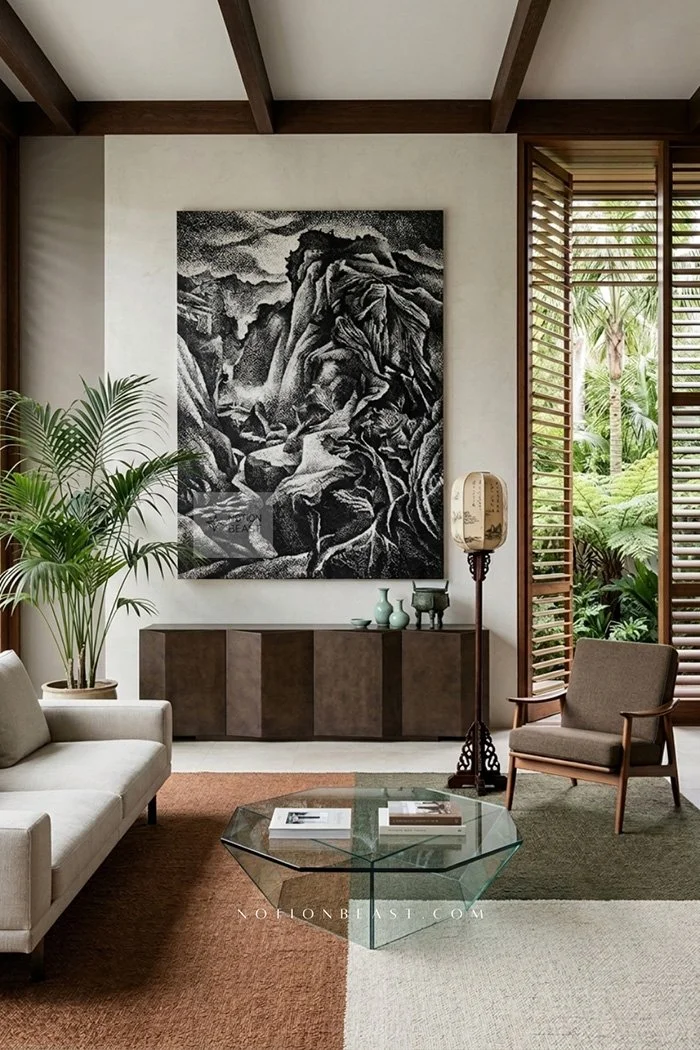
To style a sideboard in a living room, start with the wall above it -a large artwork or mirror sized to two-thirds the width of the cabinet -then build the surface display in three zones: one with height (a lamp or tall vase), one with texture (a ceramic, sculptural object, or stack of design books), and one left deliberately empty. That negative space is what separates a considered arrangement from a crowded one.
Below, we go further into each layer of that formula, including what to hang above, how to proportion objects on the surface, and how the sideboard itself affects what's possible.
Make it stand out
Whatever it is, the way you tell your story online can make all the difference.
What Should You Hang Above a Sideboard in a Living Room?
Hang artwork or a mirror sized to roughly two-thirds the width of the sideboard -this keeps the proportions balanced without the wall piece overwhelming the cabinet below it. A large-scale artwork tends to work better in a contemporary or eclectic living room where the sideboard is meant to anchor a wall rather than blend into it. A mirror works particularly well in smaller rooms or rooms with limited natural light, since it bounces light back into the space.
In an art-forward living room -the kind built around a large, dramatic canvas rather than matching prints -the artwork does more work than any object on the surface. A sideboard works best when it solves a room problem before it decorates one -restraint and proportion matter more than what sits on top. If the wall piece is already doing the heavy lifting, the surface below it can stay quieter.

Bernois Sideboard by Bonaldo An Italian-designed sideboard by Roberto Paoli for Bonaldo, with vertically folded door panels that create an iridescent light-and-shadow surface that changes with the observer's position and the room's natural light. You can download Spec and care guide from their product page. Made to order in a range of finishes, with a 2-year guarantee. Ships Australia-wide through Transforma.
Enjoyed this design guide? Follow along on Pinterest for weekly editorial home inspiration.